Available as a single workshop, an intensive lab, an ongoing class, or company training — format, duration, and group size shaped around your context. Suited to professional dancers and advanced performers; adaptable for other levels on request.
[Get in touch] to talk through what would work for your group or venue.
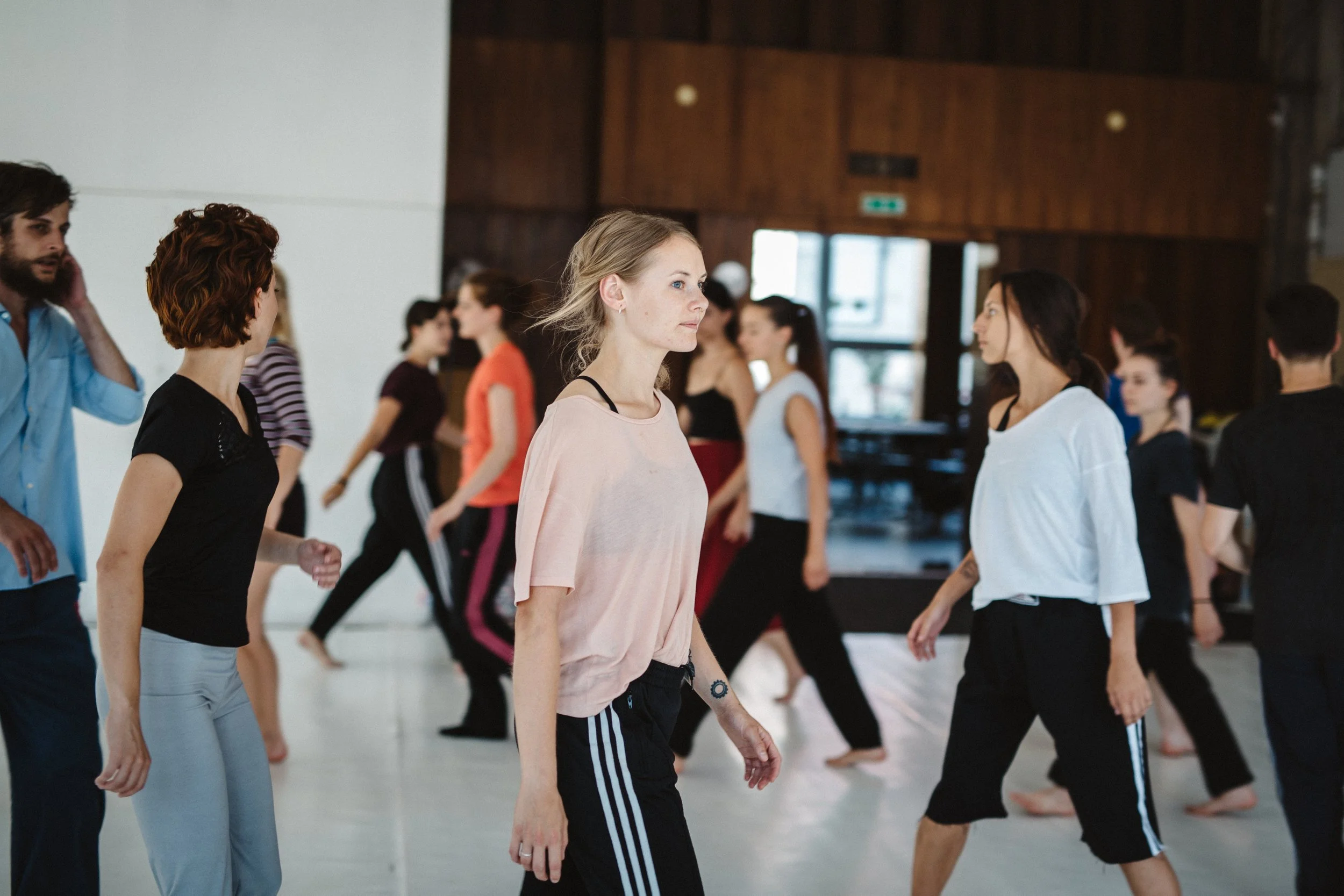
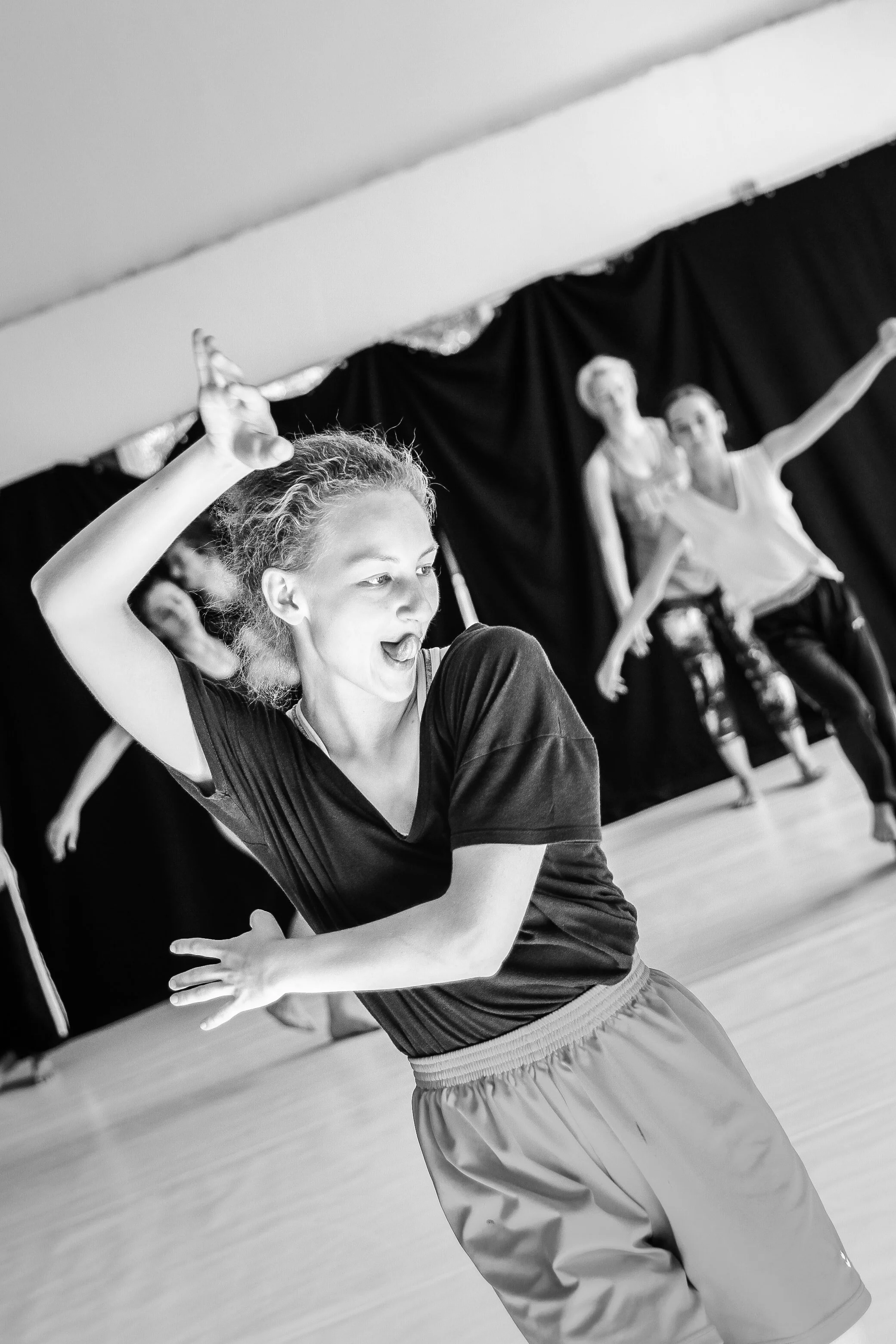
Musicality isn't something layered onto movement afterward — it's a capacity that can be trained directly, to a level most dancers never reach. Lizard Beats works toward a complex, embodied sense of rhythm that becomes immediately available inside each participant's own movement — not a fixed vocabulary imposed on them, but a sharpened instinct they carry into any material. The same work builds presence: the capacity to hold a room, on stage or in a studio.
CORE PRINCIPALS
Rhythm as structure and drive: practiced through concrete physical tools — stepping, clapping, percussive action — becoming the source of timing, weight, and dynamics, rather than something movement is set to.
Layered coordination: independent, sometimes conflicting rhythmic patterns distributed across the body — used here as a tool to sharpen rhythmic capacity, not as an end in itself.
Disruption & reorganisation: shifting patterns and asymmetry push participants past what can be managed cognitively — new coordination emerges through embodied problem-solving, in service of a more complex sense of rhythm and presence.
WHAT it builds, and who's behind it
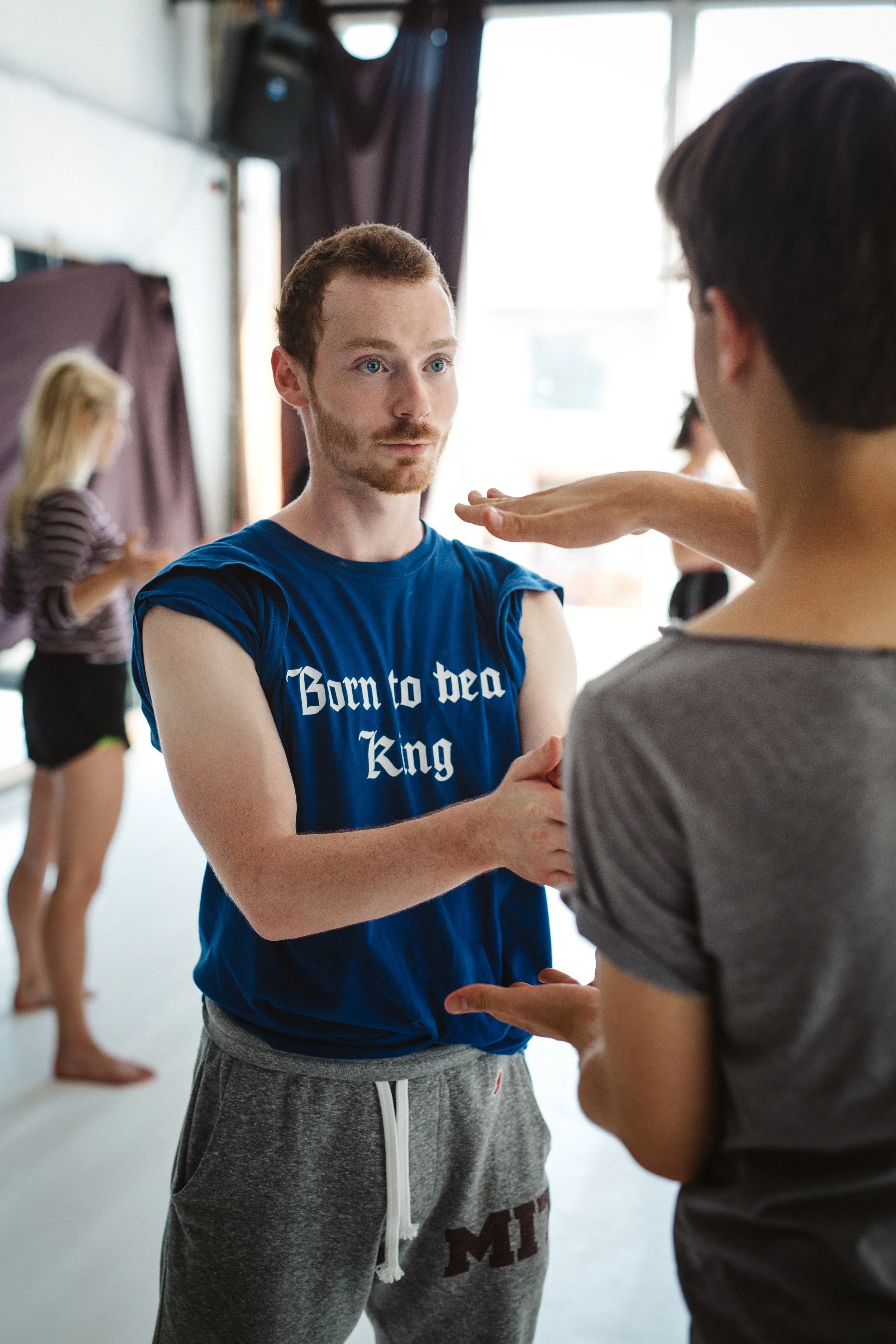
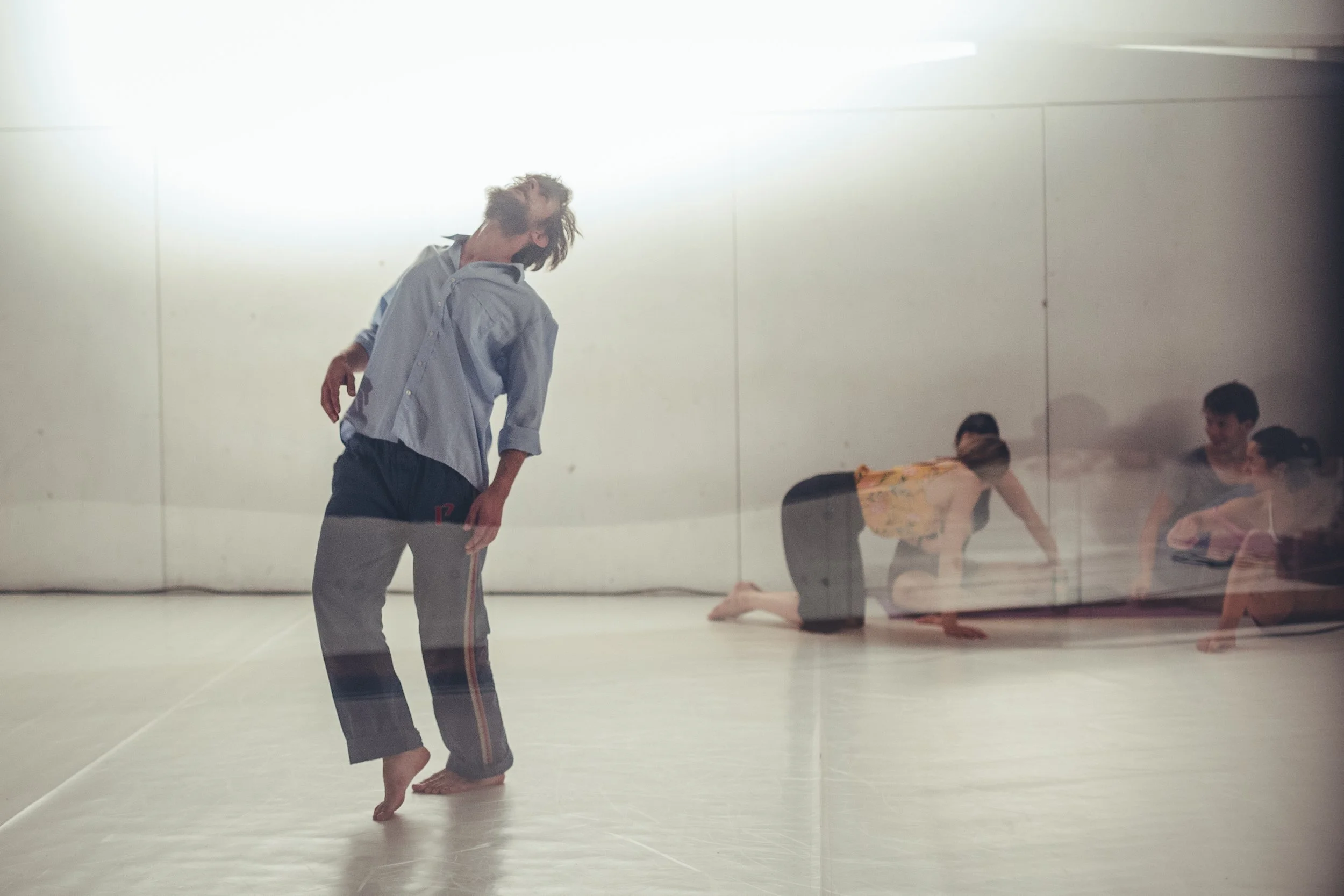
A complex, embodied sense of rhythm and musicality, directly usable within each dancer's own movement · sharpened stage presence · adaptability and speed of response under complexity and pressure. Coordination and independence of limbs improve along the way, as a byproduct of the training rather than its aim.
Developed and taught by Gyula Cserepes, choreographer and pedagogue, who has taught continuously since 2007 — including a teaching post at the University of Theatre and Film Arts, Budapest (2018–2022), alongside workshops across Brussels, Bern, Lausanne, Bristol, Moscow, Johannesburg, Riga, and Oaxaca. The method draws on Béla Bartók's theory of folk-integration into composed music, David Zambrano's Flying Low / Passing Through pedagogy, Franklin Method functional anatomy, and positive-reinforcement training theory (Pryor/Skinner) — formalised in a citation-backed methodology developed as Gyula's MA thesis in Dance Pedagogy, Budapest Contemporary Dance Academy (2022).